

SIXTIES FLASHBACKS: Rediscovering Dobie Gillis, TV’s Midcentury Teen Hepcat and the Ferris Bueller of the 1960s
Once Upon a Time in Postwar America… The Many Loves of Dobie Gillis blazed a trail on television as a pioneering teen-oriented television show with hip scripts and well-developed characters

The Many Loves of Dobie Gillis was a groundbreaking sitcom with a loyal fan base in its day, and it left an indelible mark on pop culture. This beloved series, which aired on the CBS network from 1959 to 1963, wasn’t your average teen comedy. It turned out to be a trendsetting phenomenon that launched careers, popularized an early version of the counterculture, and revolutionized television storytelling techniques.
From Maynard G. Krebs’ lovable beatnik (sorta) rebel to Dobie’s charming fourth-wall breaks, this show was ahead of its time in more ways than one. Whether you happen to be a longtime fan or a curious newcomer, what follows here are ten fascinating facts about The Many Loves of Dobie Gillis that showcase why this series remains relevant decades after its final episode aired in 1963.
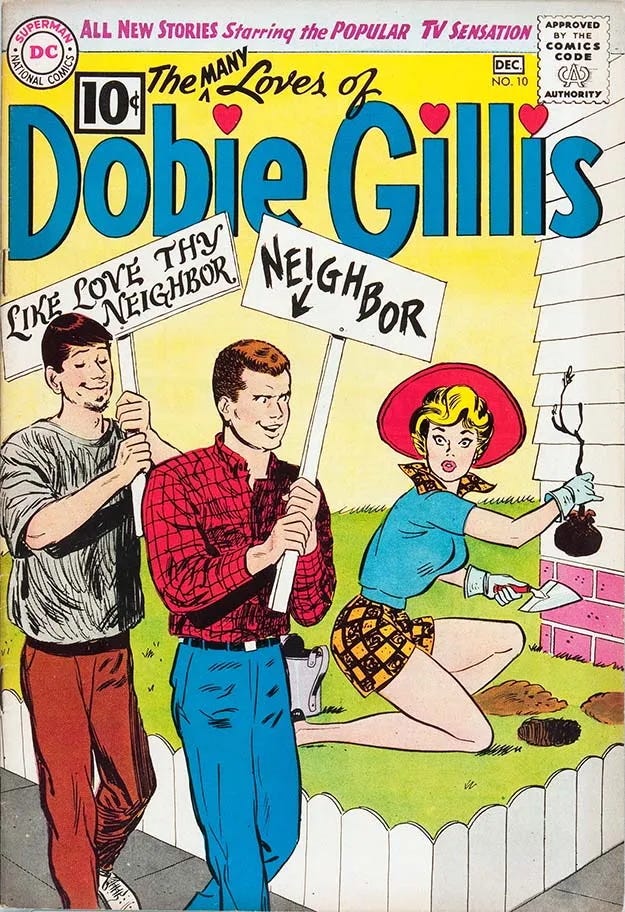
Before diving into the list, some historical context helps: Dobie Gillis (as it came to be known after its first season) was an adaptation of short stories and novels by Max Shulman (1919-1988), a popular humour writer of the time. His first novel in the series, The Many Loves of Dobie Gillis, appeared in bookstores in 1951. Themes of teenage angst, romantic rivalries, and the search for one’s place in the world were all present in Shulman’s original stories.
Before Dobie Gillis became a television icon, the character appeared on the big screen in a 1953 film titled The Affairs of Dobie Gillis. Starring Bobby Van in the title role and a young Debbie Reynolds as his love interest. The movie was a lighthearted musical comedy, notably featuring one of Bob Fosse’s earliest screen performances. But it lacked the sharp wit, social commentary, and direct-to-camera asides that made the television series unforgettable. The TV show Dobie Gillis, which came six years later, is widely considered the superior and more definitive take on Max Shulman’s beloved characters.
This backstory helps set the stage for a groovy trip down Sixties Flashback Lane to explore why Dobie Gillis was much more than just a lovestruck teen — he emerged as an enduring cultural icon in the history of television.
Here are 10 reasons why Dobie and his pals deserve to be remembered:
1. Dobie as the “Ferris Bueller of the 1960s”:
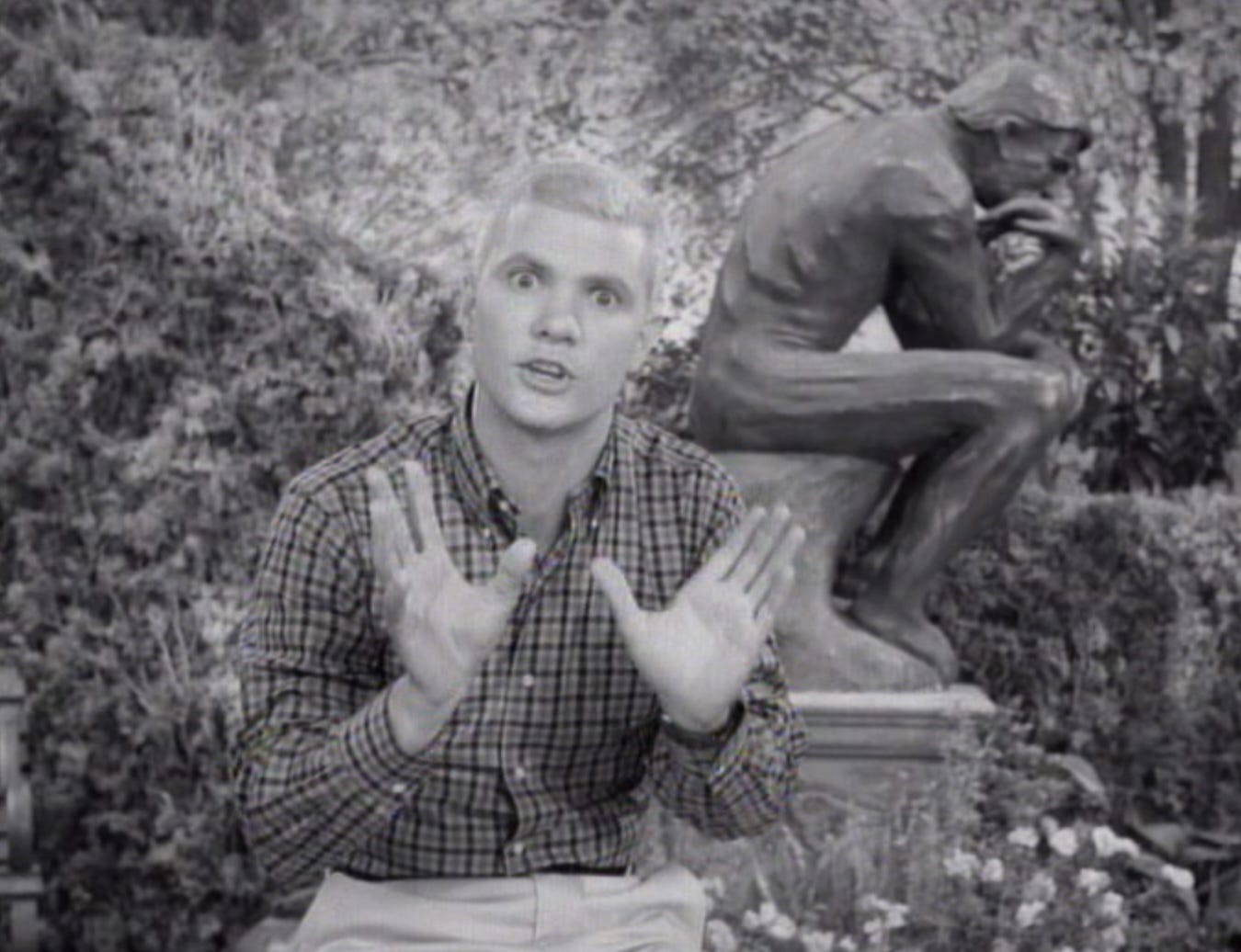
The main character, Dobie Gillis, played by Dwayne Hickman, would often appear sitting next to a replica of of Rodin’s statue, The Thinker, then he’d start talking to his audience by looking straight into the camera and telling them about his thoughts and adventures. Dobie’s direct-to-camera asides were groundbreaking for a sitcom of its era. This was a pioneering use of the fourth wall break, a technique that became a signature of later shows and films, especially John Hughes’ popular 1986 youth comedy Ferris Bueller’s Day Off. And it helped Dobie build a rapport with his predominantly teen audience at the time.
2. Warren Beatty’s Breakout Role
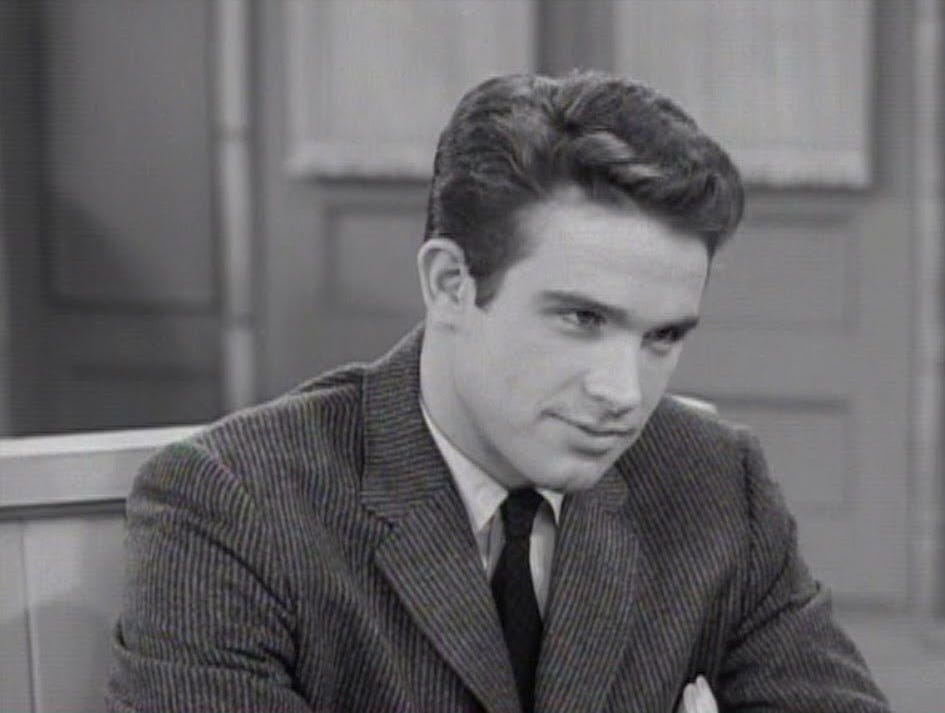
Before he became a Hollywood superstar and Oscar-winning director, a young and strikingly handsome Warren Beatty — younger brother of actress Shirley MacLaine (who was experiencing her own career heyday at the time) — appeared as the wealthy, womanizing Milton Armitage, Dobie’s romantic rival. His time on the show was brief, appearing only during the first season, but it marked one of his first major acting roles. You could tell the man was a hell of an actor, even in his fleeting tenure, and he adds a lot of gravitas to the show. Shortly after leaving the cast, Beatty began appearing in such classics as Splendor in the Grass (1961) and The Roman Spring of Mrs. Stone (1961).
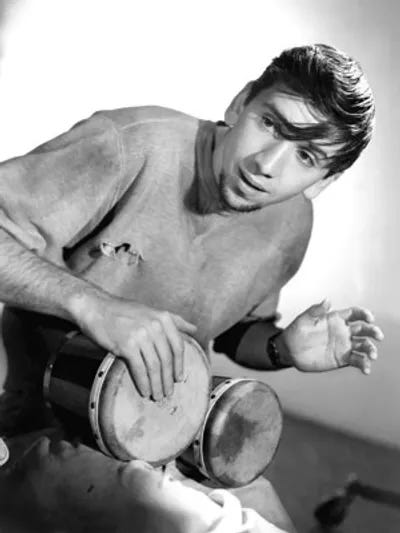
3. The Rise of Beatniks via Maynard G. Krebs
The character of Maynard G. Krebs, played by a pre-Gilligan’s Island Bob Denver, was Dobie’s best friend and became a pop culture sensation and the most popular character on the show — even more than Dobie himself. With his goatee, messy hair, scruffy sweatshirt full of holes, love of cool jazz, and aversion to work, Maynard was television’s first mainstream depiction of a Beatnik. His familiar catchphrases, including “Like, wow, man,” and his fear of the word “work,” helped to introduce Beat culture to a wider American audience. Years later, Bob Denver, in his wonderful 1993 memoir Gilligan, Maynard, and Me, described the preparation he went through to play Maynard:
“This was the late fifties and Beatniks were the funkiest things around. I had been to coffeehouses in L.A. where beatniks hung out, and they fascinated me. I listened to their beat poetry and jargon. I even tried to wade my way through the Beats’ bible, On the Road, by Jack Kerouac…. So when I got to play a Beatnik, I made sure he was a real protest cat, man. I tried to put the word like in every sentence Maynard uttered. Also man and cool. Usually together…. Maynard was also a jazz fan. I mean, like, he was obsessed, man. If he hadn’t had Dobie for a friend, he would have stayed in his room all the time listening to jazz.”[1]
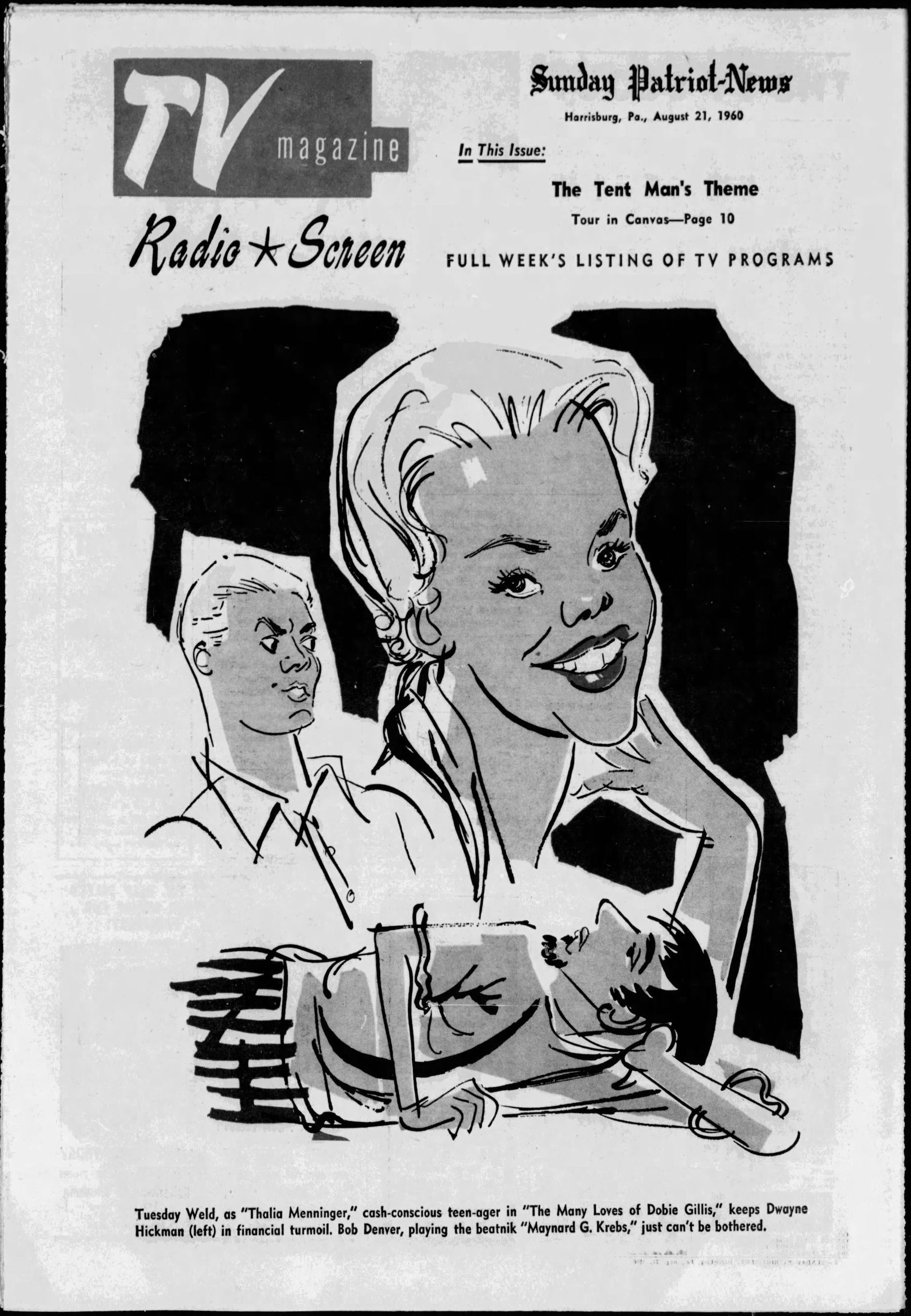
4. Paving the Way for Teen Sitcoms
As one of the first sitcoms to center on the lives of teenagers, Dobie Gillis helped to establish the template for future shows like Happy Days, Welcome Back Kotter, What’s Happening!!, and Saved by the Bell. It brought the high school experience — complete with classes, dating, and social pressures — to the forefront of television comedy. And Dobie was the archetypical “everyteen” of his day. Dobie’s optimism stemmed from his belief that the next beautiful girl or the next get-rich-quick scheme would be “the one.” Most episodes, he’d bounce back from rejection or failure to try again. This dogged pursuit, often narrated by his direct-to-camera monologues, propelled the show’s comedy and its optimistic Kennedy-era can-do spirit.
5. The Iconic Midcentury Jazzy Theme Song
The show’s catchy, jazzy theme song, “The Many Loves of Dobie Gillis,” — performed by sung by Jud Conlon’s Rhythmaires and singer Gloria Wood — with its upbeat tune and clever lyrics, is instantly recognizable to fans. It also became a minor hit on the Billboard Hot 100, heard on transistor radios across America. The tune, composed by Lionel Newman, was Midcentury hepcat TV theme music at its finest, right up there with Nelson Riddle’s Route 66 theme.
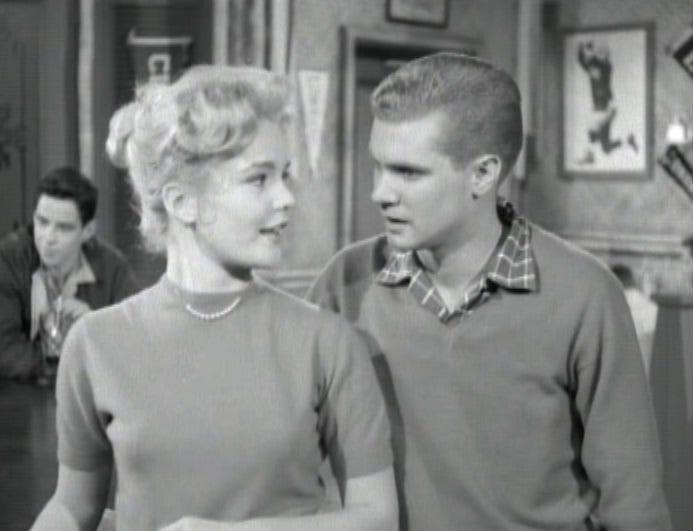
6. The Women of Dobie Gillis (part 1) – Tuesday Weld
Actress Tuesday Weld — who soared to the heights of movie fame along with Warren Beatty — played the role of Dobie’s main love interest, Thalia Menninger. Her character was central to the first season’s high school setting, as Dobie was constantly trying to win over the beautiful, but shallow and materialistic, Thalia. Her character was portrayed as intelligent, cunning, and always looking for ways to improve her social and financial status. Weld’s departure at the end of the first season was part of a shift in the show’s focus. After the first two seasons, Dobie and his friends went to college, and the show’s storylines moved beyond the high school setting. During her season as a Dobie Gillis regular, Weld became a fan favourite, and she was nominated for “Best Promising Newcomer” at the 1960 Golden Globe Awards.
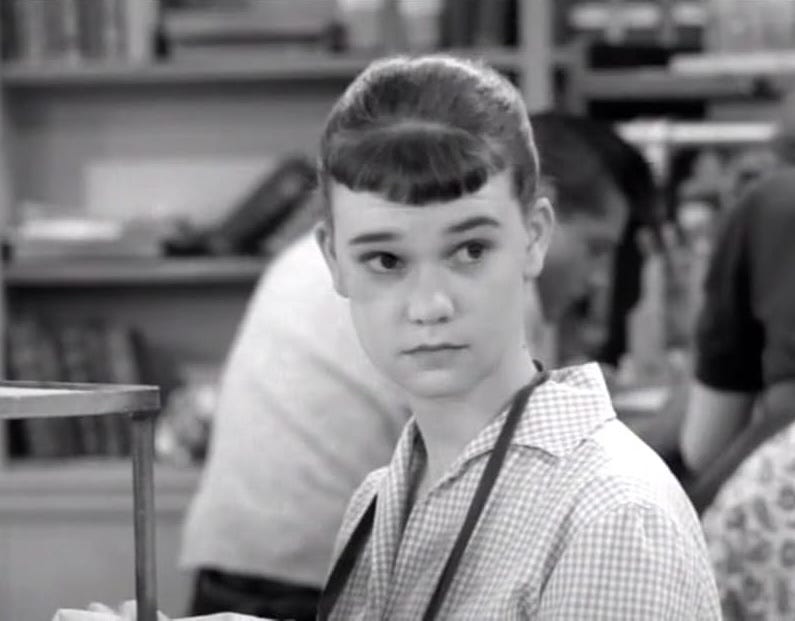
7. The Women of Dobie Gillis (part 2) – Sheila Kuehl
While many of the show’s cast members went on to further acting roles, actress Sheila Kuehl’s career path took a completely different and equally meaningful turn. Kuehl, then acting under the name Sheila James, played Dobie’s love interest Zelda Gilroy, an intelligent, independent, and sometimes feisty character who inspired young female viewers across the country as a bright and highly capable role model. After Dobie Gillis ended its run in 1963, Kuehl left acting to become a prominent attorney, a California state legislator (the first openly-gay member of the California State Assembly), and a courageous advocate for LGBTQ+ rights. Her journey from actress to a significant political figure and an inspiring LGBTQ+ activist is a remarkable story on its own, and a testament to the diverse and lasting impact of the show’s cast.
NOTE: For a wonderful deeper dive into the acting career and the heroic reinvention of Sheila James, a.k.a. Sheila Kuehl, check out this fascinating 2023 article on her from the great pop culture history blog A Shroud of Thoughts.
Above: The brilliant, amazing (and heroic) Sheila Kuehl discusses working with Bob Denver on the set of Dobie Gillis. This poignant remembrance includes a fascinating moment when Kuehl and Denver went to Birmingham, Alabama, in early 1963, and the two of them confronted the racism of Jim Crow apartheid. Please watch it if you get a chance! You’ll never look at Bob Denver the same — in a good way.
8. Dobie’s Big Revival
For television enthusiasts in Generation X, including Yours Truly, the discovery of The Many Loves of Dobie Gillis didn’t happen in the 1960s (we missed it the first time around, alas), but rather in the late 1980s and early 1990s. Thanks to its prominent place on the Nick at Nite lineup, the show found a new life as a “cult classic.” Much like other shows of its time, including The Donna Reed Show or Route 66, its quirky humour and memorable characters resonated with younger audiences of the 1980s and 1990s, who found it to be a striking improvement over most of the crap on TV at the time. The late-night reruns introduced Dobie’s anxieties, Maynard’s “work”-aversion, and Zelda’s unwavering love, to a generation that was just starting to get nostalgic for a time before they were born. It is a testament to the show’s enduring appeal that it still had lessons and laughs to Generation X, and surely it has the same gifts to offer to Millennial and Gen Z audiences today.
9. Fans Mobbed Poor Maynard G. Krebs
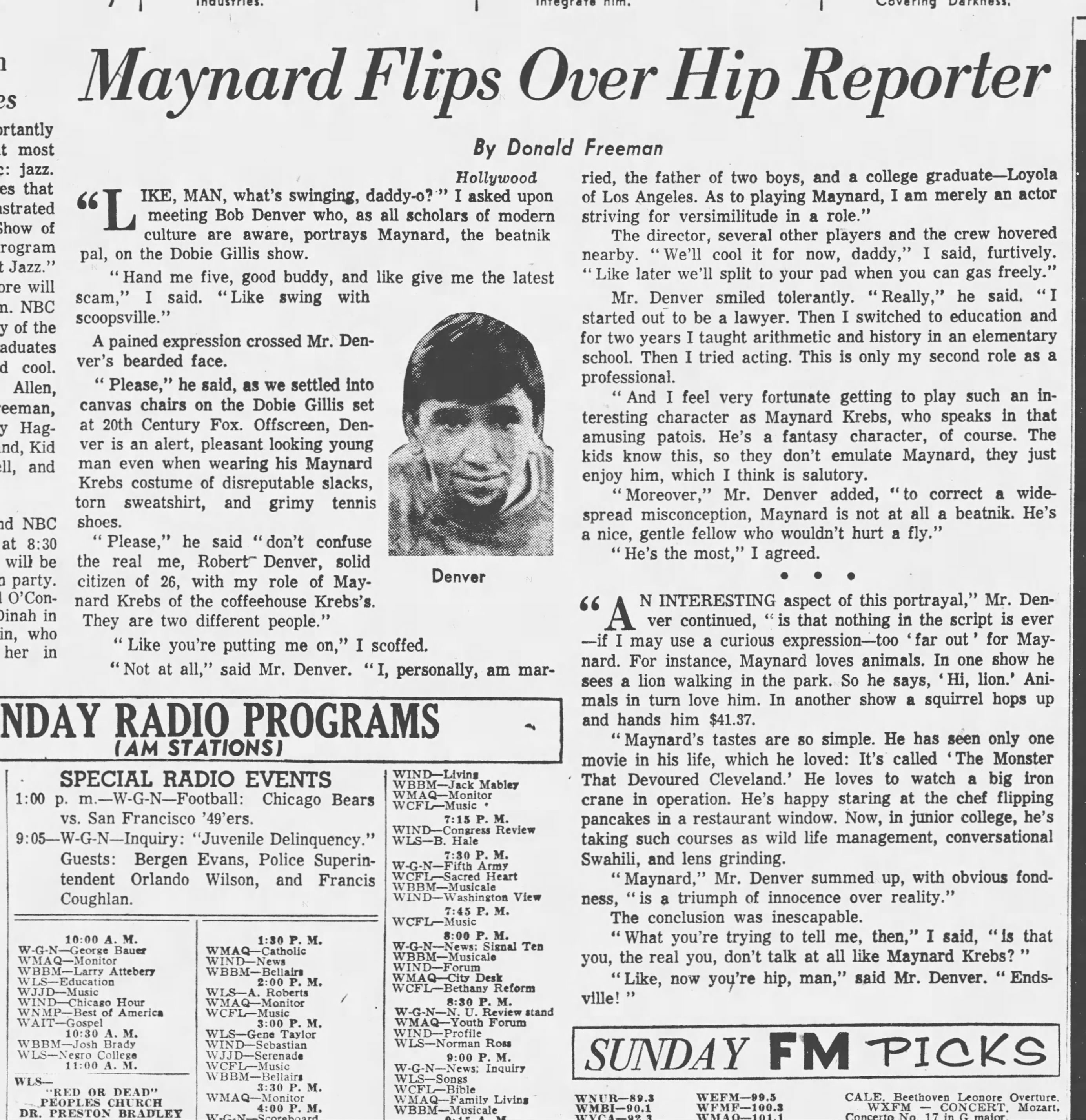
Both Bob Denver and Dwayne Hickman became superstars as a result of Dobie Gillis. However, of the two, Bob Denver paid the biggest price for his fame, constantly being spotted by excited screaming fans — mostly young females — who would charge at him wherever he went. Denver, who sported a real goatee to play Krebs, lamented in a 1962 interview: “People spot me a mile away and mob me.”[2] After visiting Disneyland around that time, Denver bemoaned: “It’s a drag, dad. I’m 27 years old, married, with two children. But when I took my children to Disneyland, who becomes a big attraction? Me! I was mobbed by a lot of little kids who wanted to pull my beard and see if it was real. I’m beginning to think I’ll wind up like Peter Pan. I’ll never get to grow up bit I’ll still have a beard.”[3]
Above: Here is the first episode of The Many Loves of Dobie Gillis, which debuted on September 29, 1959. Keep in mind that the show continued to improve as the characters developed more, and the writing became better.
10. Finding Dobie Gillis
Dobie Gillis is widely available to newcomers and seasoned veterans alike, looking to enjoy the show’s Midcentury magic. Shout! Factory, a favourite company of nostalgia junkies like me, has released the entire series on DVD, and it is worth tracking down online and investing in the lovely set. Reruns of Dobie Gillis can also be found for free on Plex and Tubi. Amazon Prime Video features Season 1 (which is the best season, in my opinion — back when a season contained a whopping 39 episodes!).
And let me tell you: If you haven’t seen Dobie Gillis, you are in store for a treat. It is a show with strong writing, impressive character development, and plenty of genuinely funny moments, well worth watching.
NOTES
[1] Bob Denver, Gilligan, Maynard & Me (New York: Citadel Press, 1993), 15-16.
[2] Hang Grant, “Bob Denver – Who’s That?,” The Daily Oklahoman, August 19, 1962, 100.
[3] “Maynard G. Krebs is Bored By Beard,” The Pentagraph (Bloomington, IL), June 16, 1962, 16.
Great post, daddy-o! I remember Dobie Gillis! My brother was a fan, and my dad even surprised him with a set of bongo drums for Christmas back then! I didn't realize that Bobby Van was in the film with Debbie Reynolds - I always learn something new here!
Fascinating!