


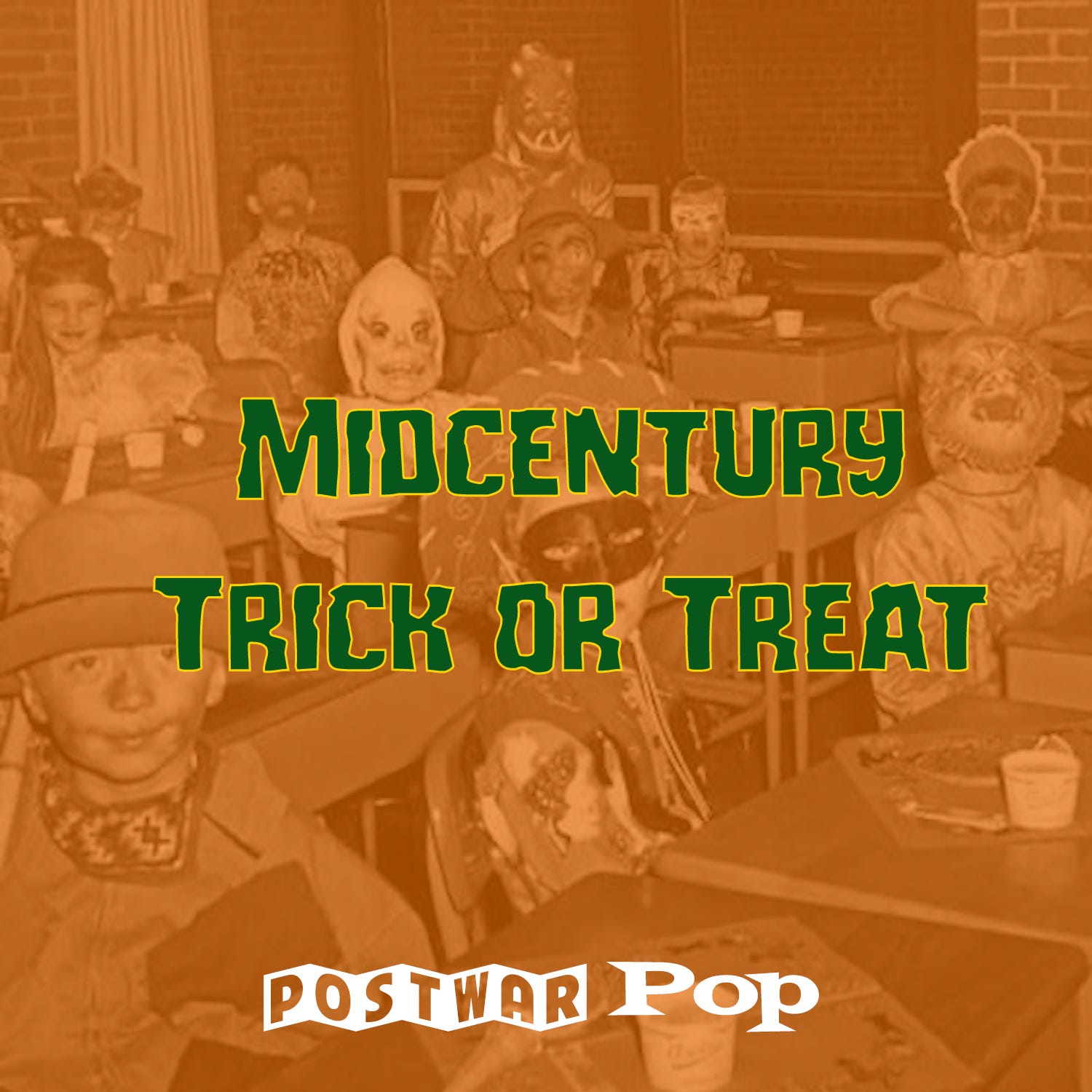
“Halloween shadows played upon the walls of the houses. In the sky the Halloween moon raced in and out of the clouds.”
— Eleanor Estes, The Witch Family (1960)
“Before buying masks, be sure eye holes are smoothly finished and allow the wearer to see clearly — both straight ahead and to each side. Masks should be of non-flammable material.”
— U.S. Department of Agriculture, “Suggestions for Halloween Safety” (1950)
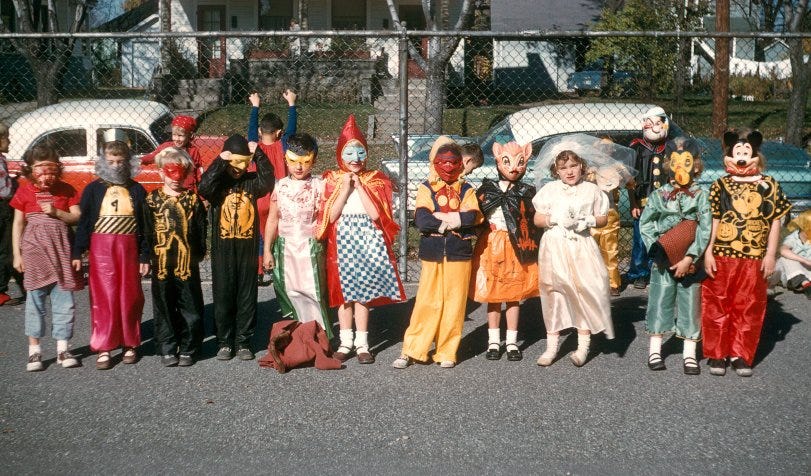
After World War II, with the United States entering a new era of prosperity and consumerism, even the ancient celebration of Halloween underwent a striking transformation. The period from 1945 to the 1970s saw the emergence of what we might call “modern” Halloween, which was a far cry from the horrifying disguises and raucous, sometimes downright destructive celebrations that characterized the event in earlier generations.
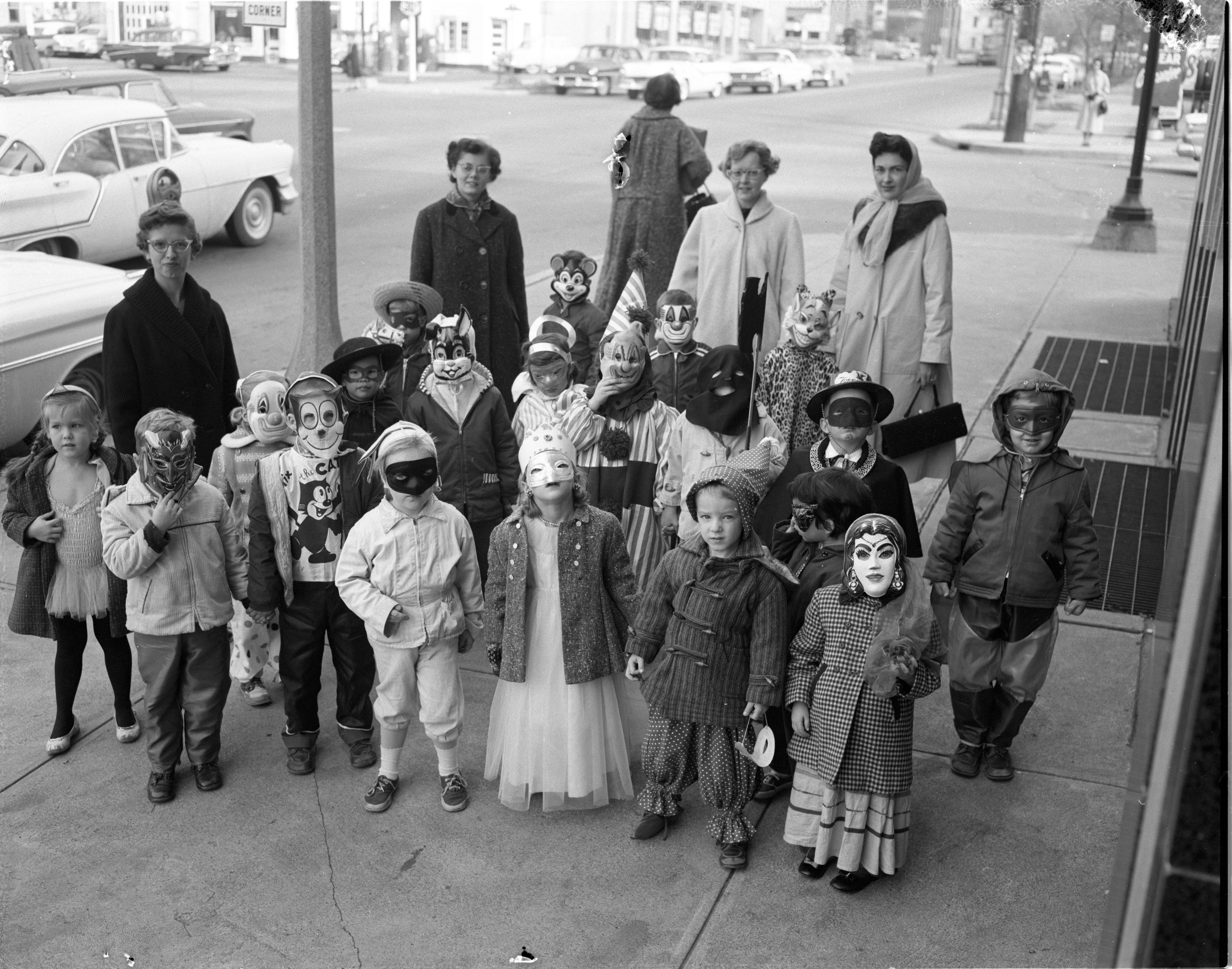
Gone were the unsettling costumes that predated the Second World War, replaced by mass-produced outfits that helped make the holiday more accessible and less frightening for children. Thankfully, the rampant vandalism and acts of destruction so common to earlier Halloweens of yore gave way to saner, less harmful celebrations.
The Postwar Era witnessed the “de-creepifying” of Halloween. Companies like Ben Cooper introduced cheap, colourful costumes based on popular comic book, movie, and pop culture characters, while manufacturers like Don Post popularized pull-over latex masks with synthetic hair.
Treats changed too, with the rise of bite-sized candies replacing homemade offerings. Even entertainment got in on the act, with the introduction of the beloved special It’s the Great Pumpkin, Charlie Brown (1966) cementing Halloween’s place in mainstream popular culture. This standardization and commercialization of Halloween reflected broader trends in American society, resulting in the holiday evolving from its violent and scary roots into contemporary, family-friendly celebrations.


Above: Images of Halloween costumes from the early decades of the 20th Century.
North American Halloween . . . Old-School Style
Even though Halloween has ancient roots, it was not a widely celebrated, mainstream event in the United States until the after the Civil War (1861-1865). Americans began to embrace Halloween in greater numbers by the late 19th and early 20th centuries. Early Halloween celebrations around the turn of the 20th century consisted largely of house parties, dances, apple bobbing, and storytelling. The “tricks” — or mischief — part of the tradition, often perpetrated by masked young men, began to escalate into costly vandalism and destructive pranks (which occasionally proved to be deadly), especially in cities such as Boston, New York, Philadelphia, Chicago, Indianapolis, and Omaha.
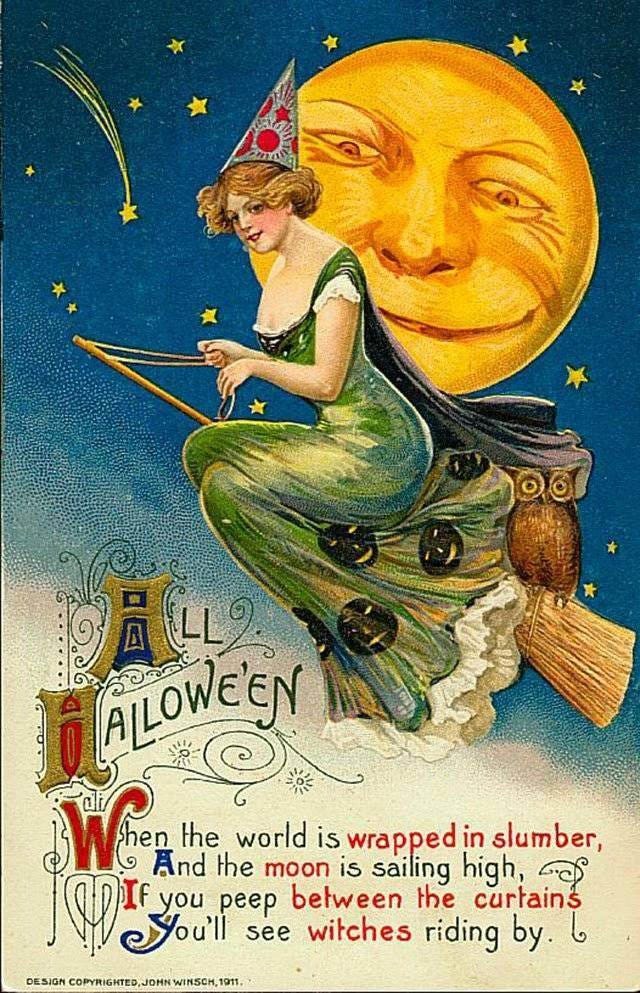
“Halloween tricks and pranks have been carried to an intolerable extreme,” opined the Lincoln Journal Star in Lincoln, Nebraska, in November 1910.[1] “Each year the property damage as a result of Halloween vandalism amounts to many thousands of dollars. This year will be no exception unless the police and parents are more vigilant than they have been in the past,” reported the Indianapolis News in the fall of 1923.[2] In Omaha, Nebraska, in 1924, more than 400 Boy Scouts volunteered to go on patrol with special “police badges” to monitor and report rampant vandalism around the city.
To curb the vandalism problem, community leaders and town councils by the 1930s actively worked to “domesticate” or “tame” the holiday, shifting the focus away from pranks and mayhem to organized, supervised events aimed mainly at adolescents and children. This is where costume parades, community parties, and organized trick-or-treating (initially as a negotiated exchange: a treat to avoid a trick) increasingly became the norm by the Great Depression.
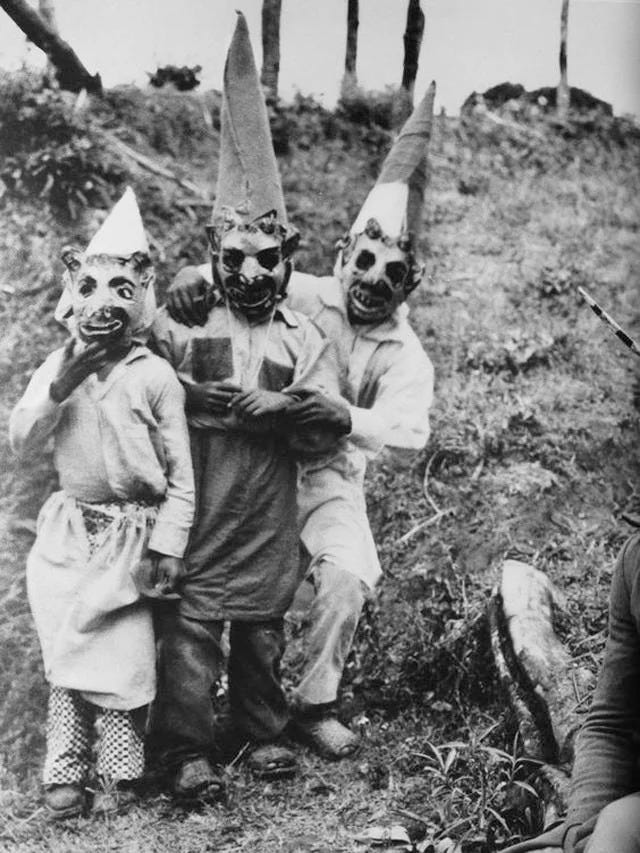
The Halloween costumes of the late 19th and early 20th centuries were a far cry from the cheerful, commercialized outfits that would come to dominate in later decades. Vintage photographs from this era reveal a haunting tableau of macabre disguises. Homemade masks crafted from papier-mâché, burlap, or even animal bones lent an air of otherworldly menace to revellers.
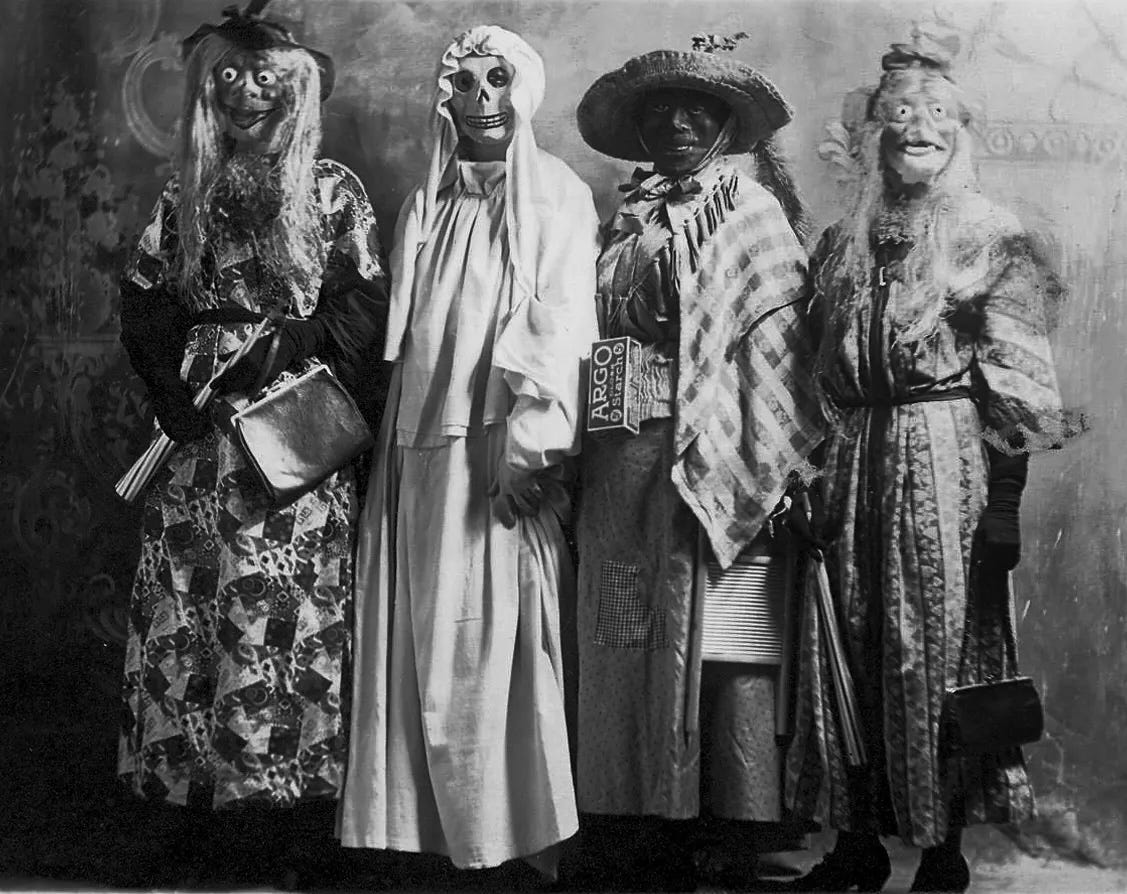
Grotesque face paint, exaggerated features, and blank, hollow-eyed stares were common, creating appearances that many modern viewers find downright disturbing. Full-body costumes often featured shapeless, ghostly forms or monstrous creations that blurred the line between human and creature. The faded, sometimes blurry Halloween photos that survive from late 1800s and early decades of the 20th Century often contain genuine horror, with costumes designed not just to disguise, but to unsettle and frighten in a way that reflected Halloween’s darker ancient roots.
The Modernization of Halloween
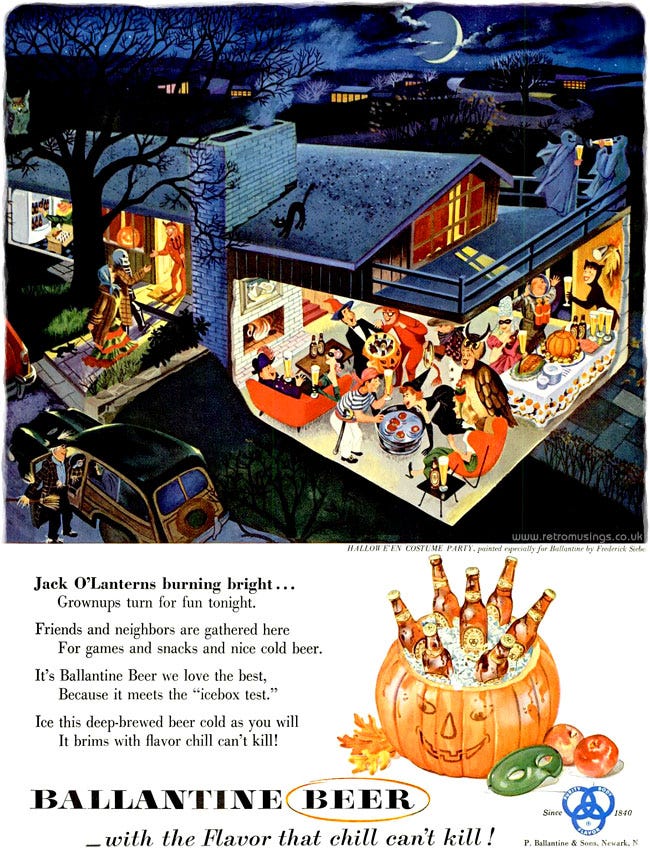
Time passed and celebrations evolved. Halloween reached its commercial zenith in the United States in the Postwar Era, roughly from 1945 through the 1970s. During these years, Halloween shifted away from the localized, chaotic, often mischief-driven holiday it had been up through the early years of the Great Depression, to the safer, commercialized and more homogeneous event of Midcentury America.
The relatively new custom of children and adolescents dressing up in Halloween costumes and going from door-to-door, knocking and ringing doorbells, crying out, “Trick or treat!”, had caught on widely in cities and towns and even rural areas across the United States and Canada.
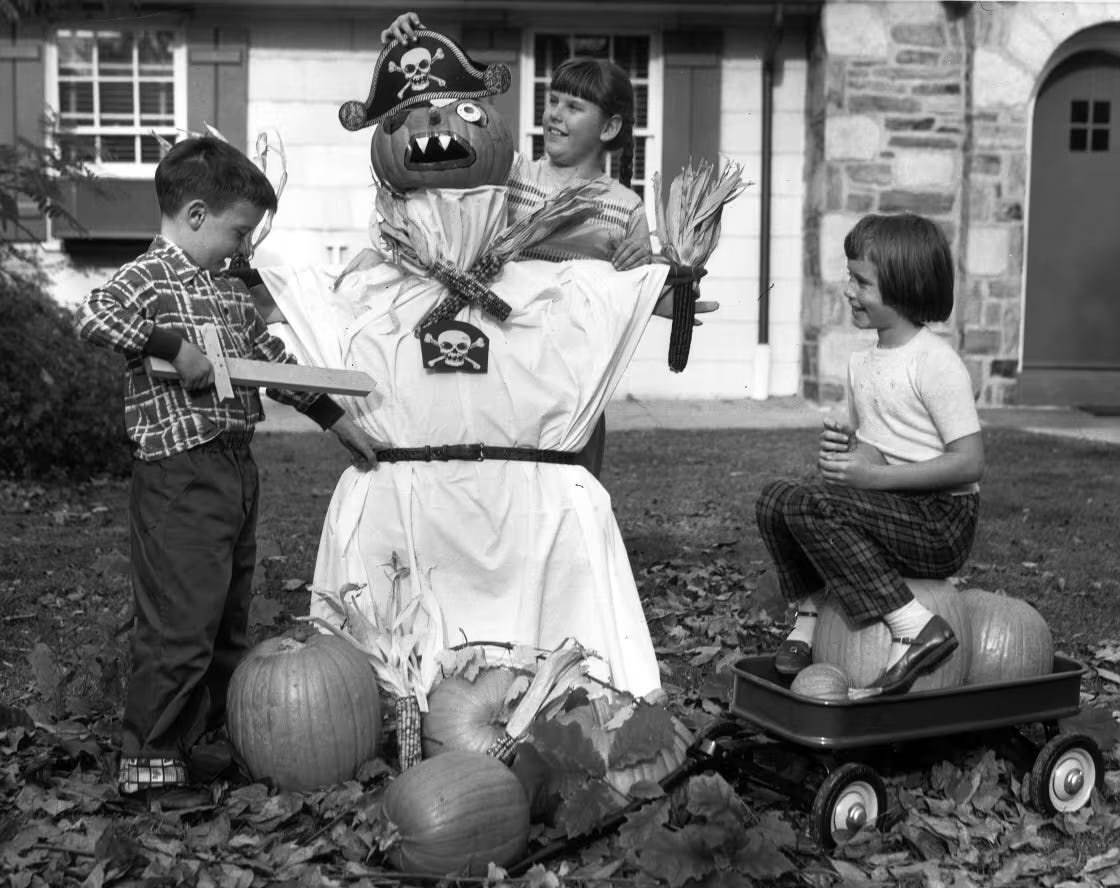
Not surprisingly, by the 1950s, safety became the top priority among planners of Halloween festivities. For example, in October 1955, Essie Elliott, vice president of the Greater Los Angeles Safety Council, issued a list of essential precautions for young trick-or-treaters, including “adults accompanying smaller children on their rounds,” “using flame retardant materials for costumes and decorations,” “making costumes short enough so that children do not stumble over them,” and avoiding Halloween masks with “small eye holes.”[3] In the fall of 1959, the American Medical Association and the National Safety Council issued a joint statement warning — among many things — that “masks are dangerous because they restrict vision . . . and provide a danger of suffocation.”[4]
In addition to trick-or-treating, Halloween parties also became all the rage in Postwar America. These gatherings often featured food and drink, games (bobbing for apples and pin the tail on the donkey were favourites), music and dancing, and prizes for best costume. Some cities and towns even published pamphlets and informative short how-to guides, aimed at youth, with tips about organizing safe and enjoyable shindigs. The city of Bridgeport, Connecticut, for example, issued its own publication “containing suggestions for children’s Halloween parties,” copies of which contained “ideas for party invitations, decorations, games and refreshments.”[5]
During the Postwar Era, a series of consumer innovations and cultural changes contributed to the mainstreaming of Halloween, transforming it into the holiday we know and love today.
The following developments proved to be especially influential:
Halloween Homes and “Haunted Houses”
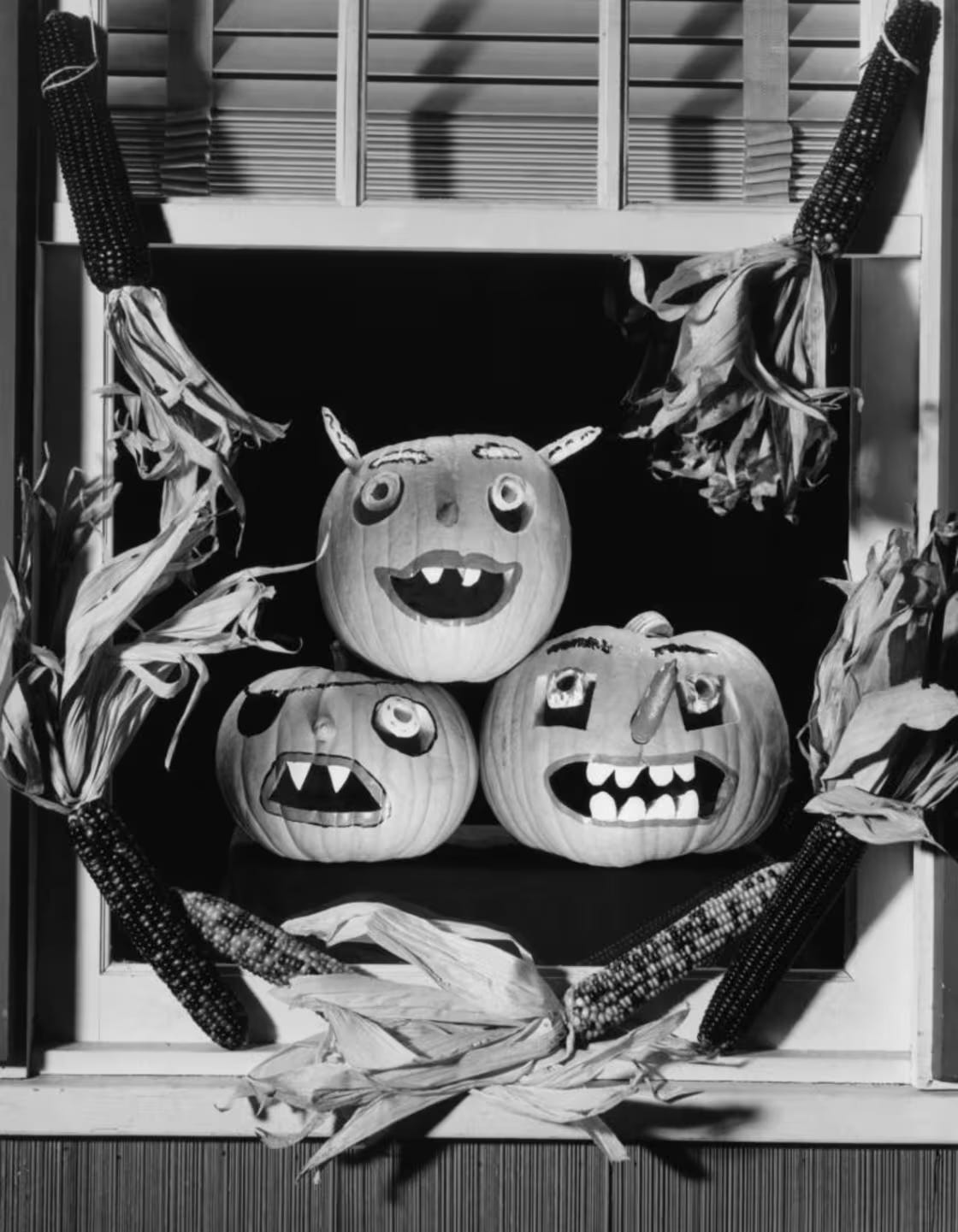
Men and women in Midcentury America started the new tradition of decorating houses with Halloween-themed items. This practice immediately became popular in neighbourhoods across the United States by the late 1940s, whether they happened to be old leafy tree-lined urban residential streets, or new suburbs boasting freshly planted saplings.
“Carving jack-o’-lanterns and building dummies to decorate the porch or yard and dressing in (often homemade) costumes and parading in the streets are contemporary activities associated with Halloween today,” observed Dr. Jack Santino, a folklorist who taught for years at Bowling Green State University in Bowling Green, Ohio.[6] Santino was describing Halloween in the early 1980s, but he could have just as easily been documenting trends in the 1950s and 1960s, when Americans from coast to coast began decorating houses with fake cobwebs, spooky homemade statues, and painted cardboard tombstones.
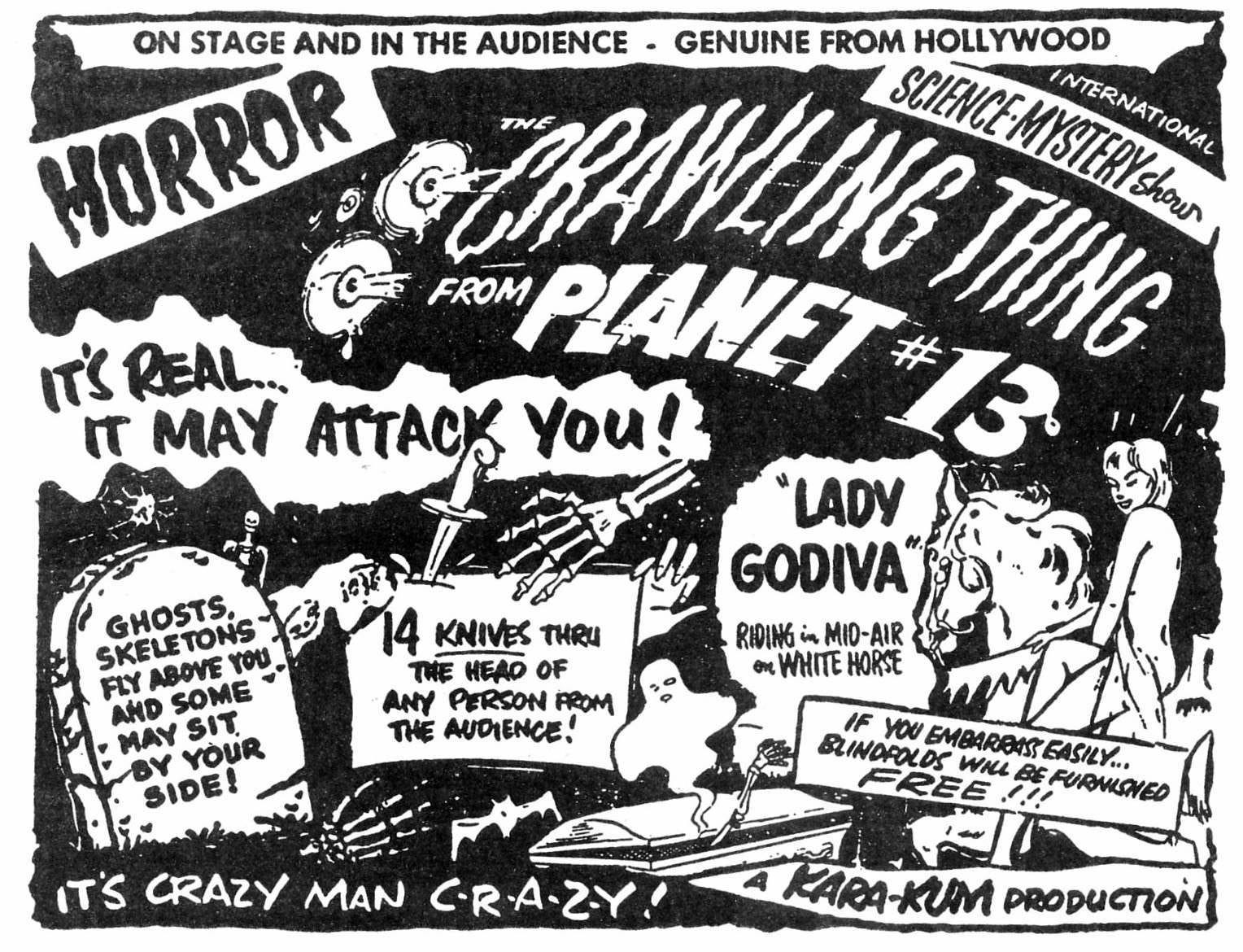
A first cousin of the decorated Halloween house was the “Haunted House” or “Spook House.” The Postwar transformation of Halloween wasn’t just commercial; it was organizational. To combat vandalism, communities channeled youthful energy into supervised fun. This manifested not only in school parades and parties, but in the rise of the community-run “spook house.” These organized haunted attractions, often run as successful fundraisers by civic organizations and charities like the Jaycees (short for the Junior Chamber of Commerce), offered a safe, sanctioned thrills and chills, usually in warehouses or vacant buildings, with volunteers dressing up as witches, ghouls, ghosts and assorted monsters. Sometimes they were presented as stage shows in local theatres, complete with flashing lights, creepy monsters, and loud noises. The “spook houses” replaced the chaotic, anonymous mischief of the holiday’s past with a controlled, ticketed, and family-friendly form of amusement that foreshadowed the coming of Disneyland’s Haunted Mansion attraction.
Halloween and the Big Three
And then there were Halloween disguises! The rise of licensed, mass-produced “costumes-in-a-box” (consisting of a plastic mask, usually held in place by an elastic band, and a decorative vinyl smock) created an iconic Postwar cultural and commercial phenomenon, tied directly to the rapid growth of television, mass media character licensing, and a thriving middle class. Of the so-called “Big Three” Halloween costumes-in-a-box makers, Ben Cooper Inc. dominated the market, flooding stores across the country with cheap yet instantly recognizable products that kids loved.
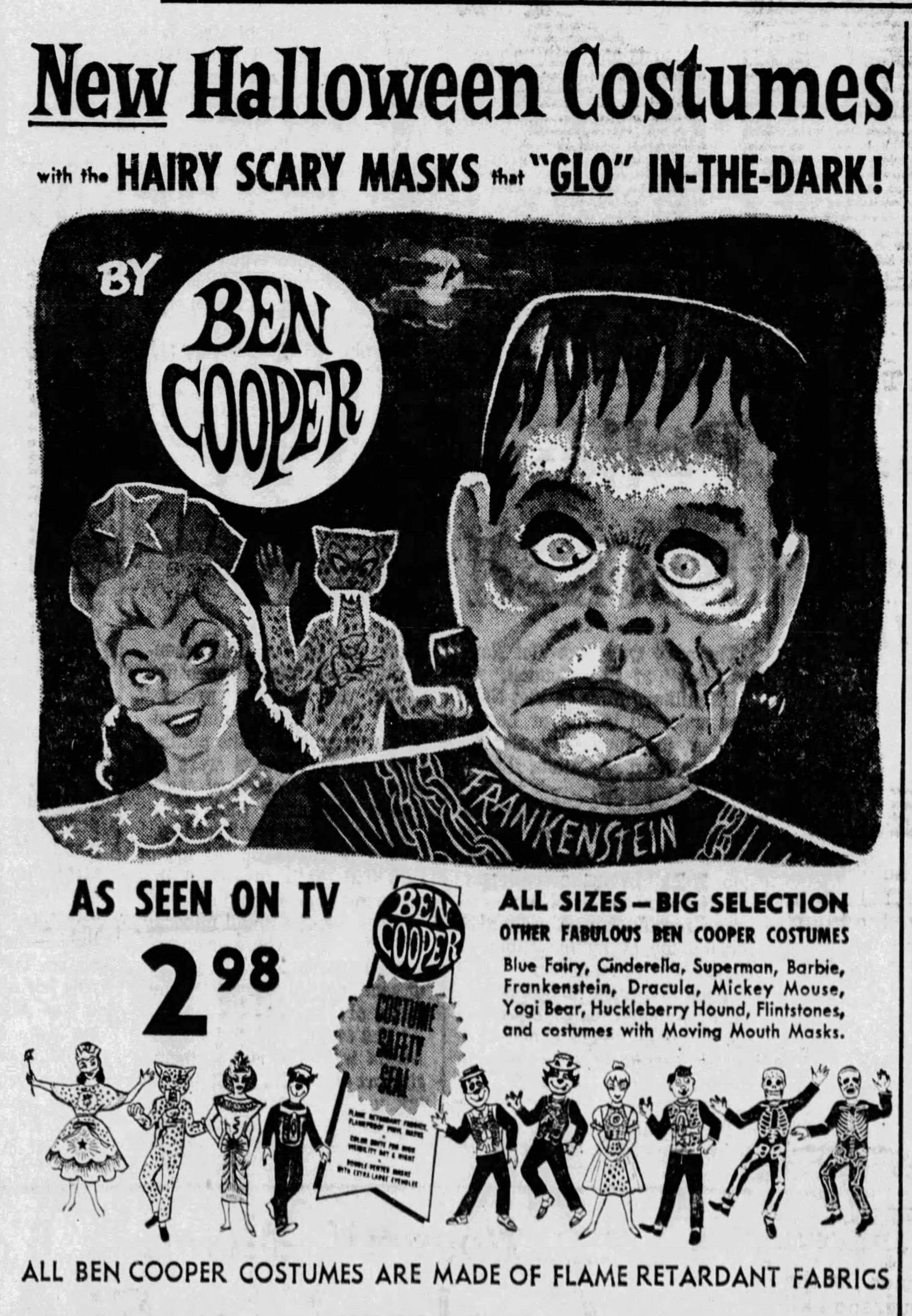
But Ben Cooper had competition, most notably Collegeville and Halco (a.k.a., the H. Halpern Company), which followed the Cooper model of mass-producing cheap Halloween costumes. “While all three companies were founded prior to World War II, it would be following the war that the manufacture of Halloween costumes would become a big business,” writes Terence Towles Canote, pop culture historian.[7]
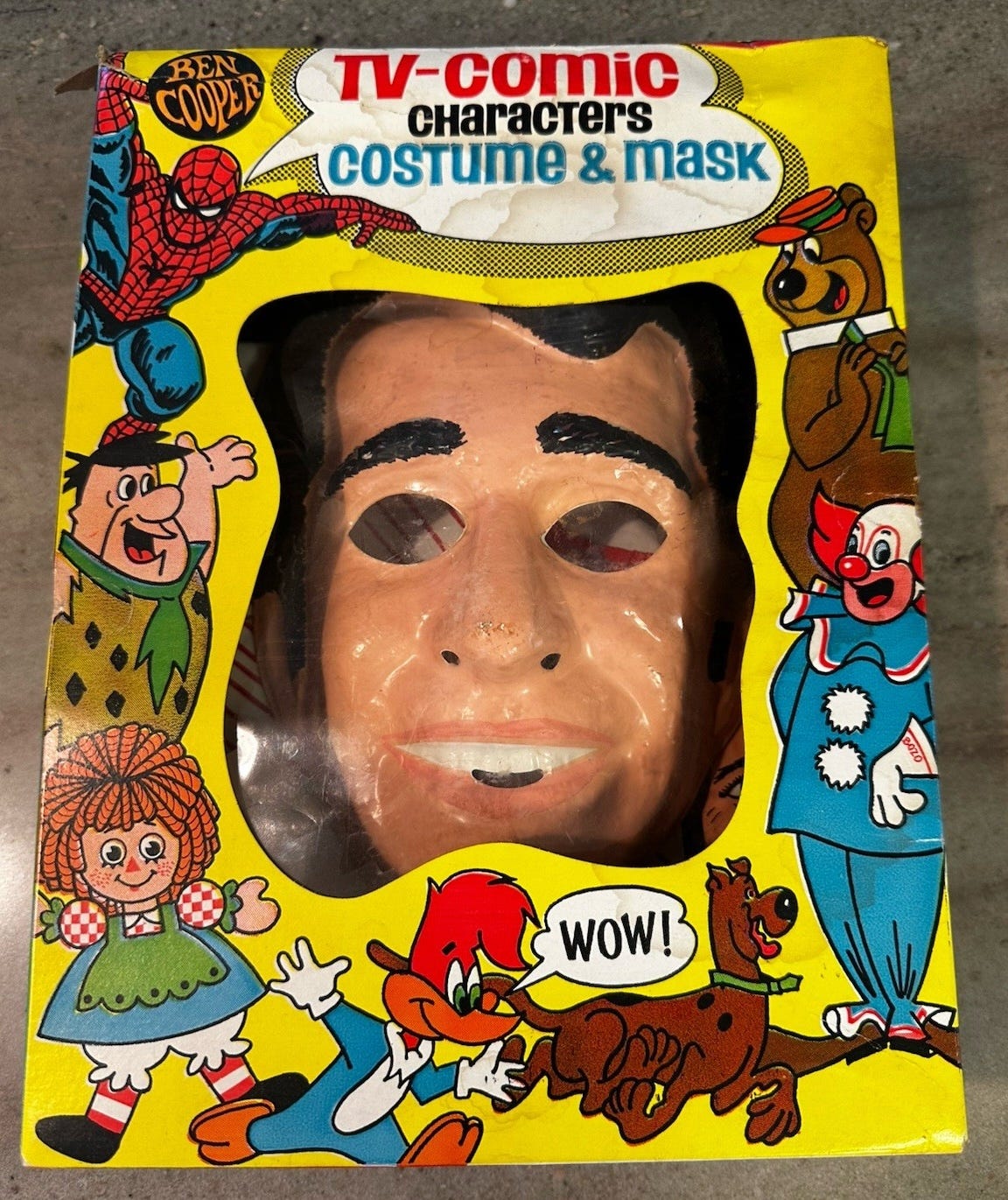
These costumes took some of the ghastly edge out of Halloween by offering something more predictable, more recognizable, than the exceedingly creepy homemade Halloween disguises of early generations. Driven by post-war prosperity and the explosion of television and character licensing (Disney, Looney Tunes, Popeye, DC Comics, TV Westerns like Davy Crockett). With the passage of time, selection began to diversify, and by the 1970s, boxed costumes included such franchises as the Universal Monsters, Planet of the Apes, Marvel Comics, Star Wars, Sid and Marty Krofft shows such as H.R. Pufnstuf, and such pop culture icons as the Fonz, members of the band Kiss, and Evel Knievel.
Halloween and the Latex Rubber Mask Craze
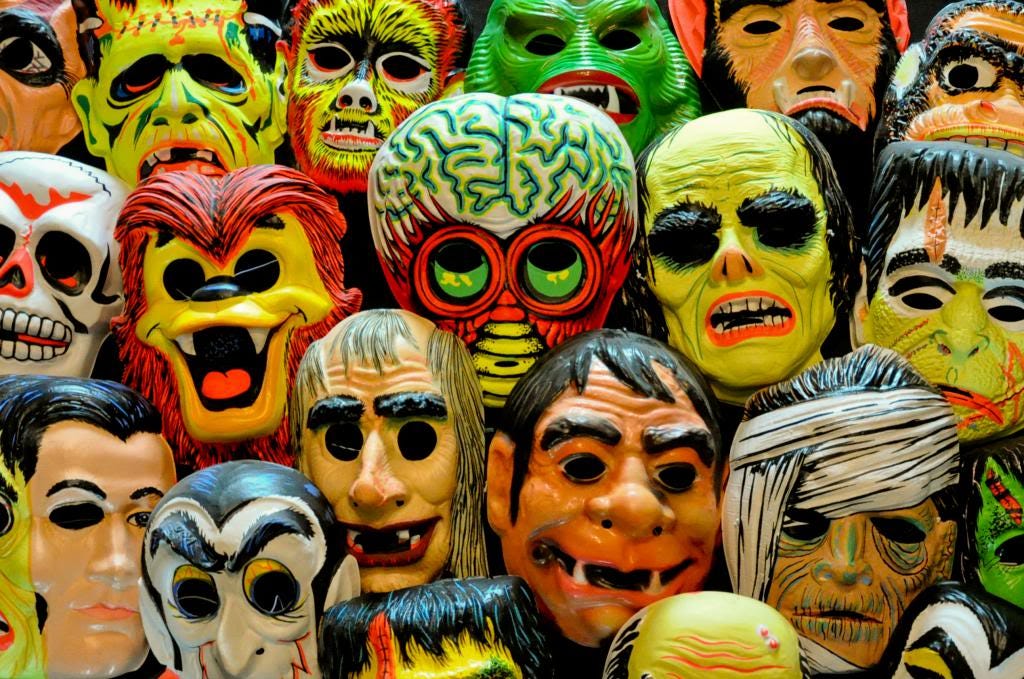
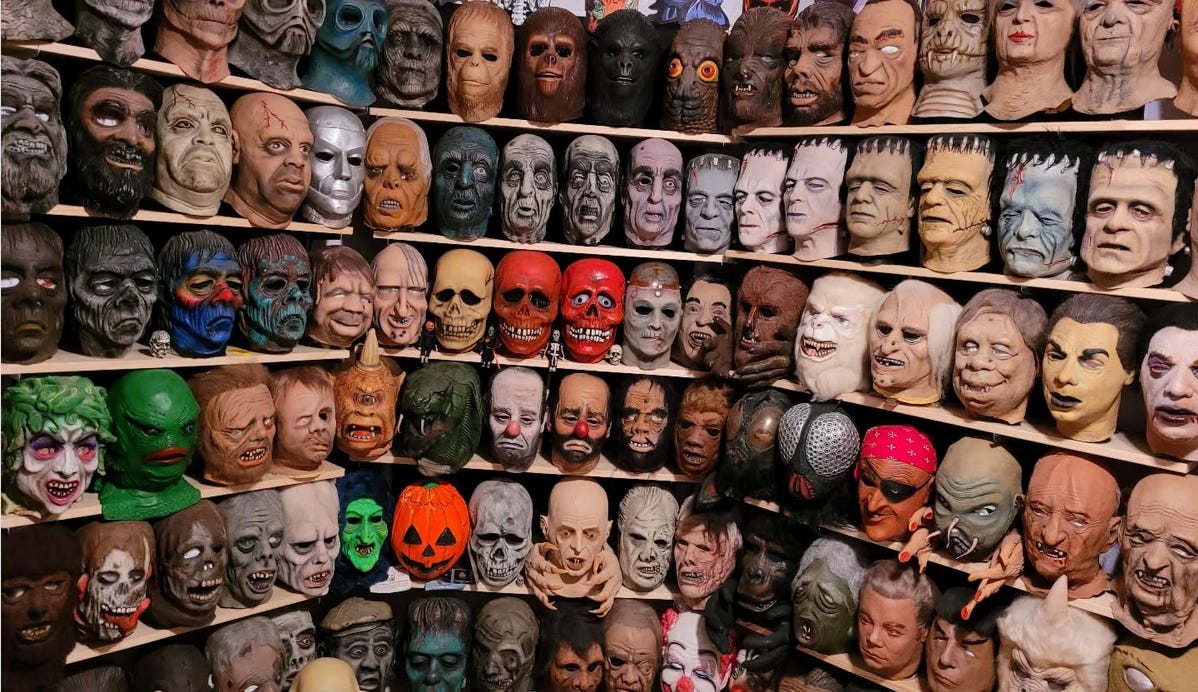
Kids with more spending loot — from babysitting, snow shovelling, paper routes, lawn cutting services, and stashed-away allowances — sometimes plunked their hard-earned shekels down on latex face masks that covered the entire head. Many of these masks came complete with fake hair and elaborate features. Early latex Halloween masks included skulls, zombies, Jack-O-Lanterns, devils, clowns, hoboes, werewolves, mummies, cats, dogs, and witches.
Mask maker Don Post Sr. (1902-1979) — owner of the Don Post Studios, the nation’s largest manufacturer of latex masks — is widely credited as the “Godfather of Halloween” because he began experimenting with liquid latex mask creation in the late 1930s. His crucial innovation was creating the first commercially sold full, over-the-head latex rubber masks in 1938, which he aimed at a thriving Halloween market.
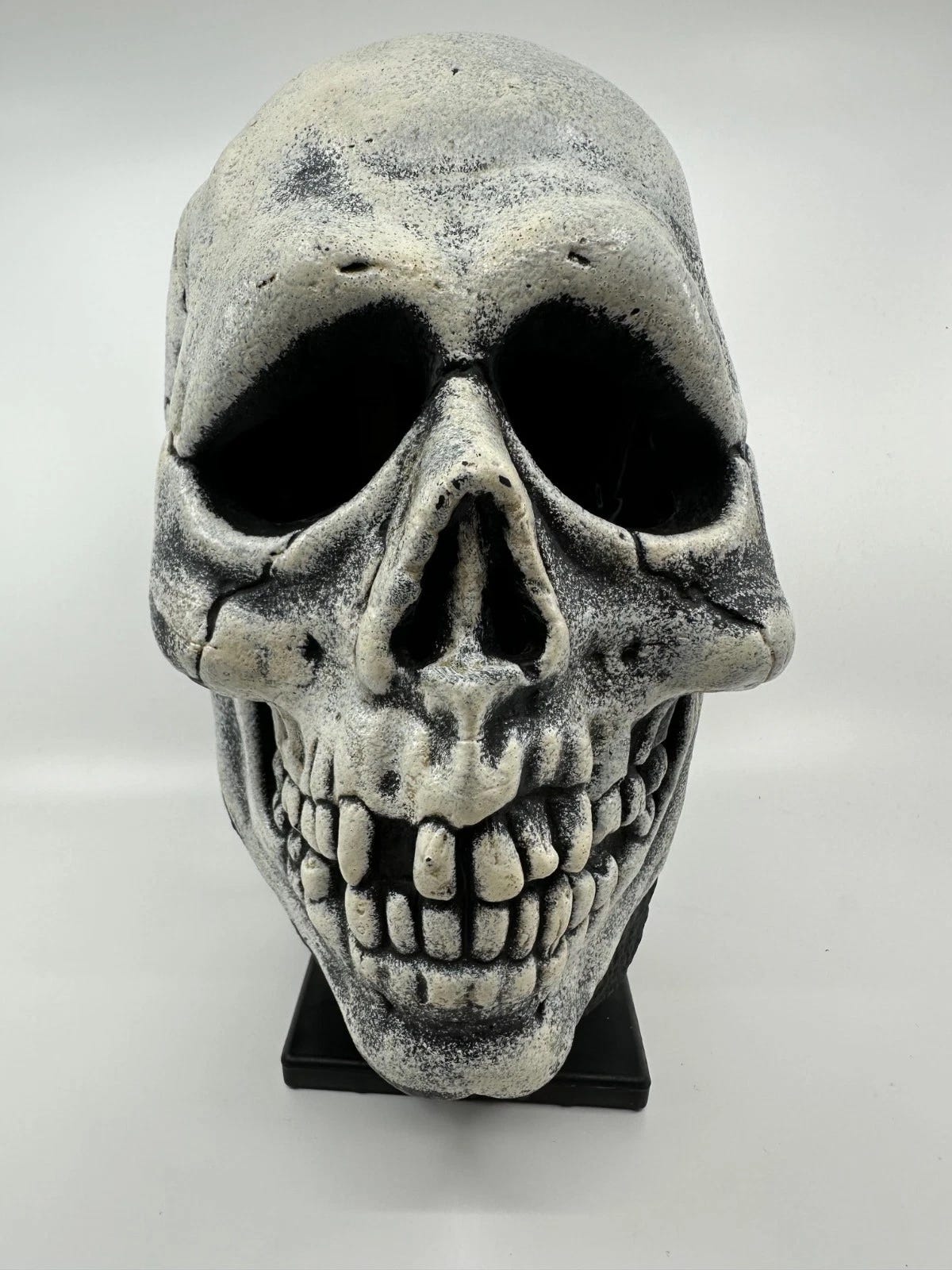
This marked a huge leap beyond the stiff, fragile papier-mâché and simple cloth masks that previously dominated Halloween. By the early 1960s, Don Post Studios became famous for pioneering product licensing for masks, most notably securing the rights to the Universal Monsters (Frankenstein, Dracula, the Wolf Man, etc.). Other creepy supernatural beings and space aliens joined the roster, creating the first wave of highly realistic, cinematic monster masks available to the public. The company also began making delightful masks of American presidents, eventually releasing comical likenesses of John F. Kennedy, Richard Nixon, and Ronald Reagan. Such items were expensive compared to the Ben Cooper boxed costumes, yet they offered a level of quality and detail previously reserved for Hollywood.
Halloween candy
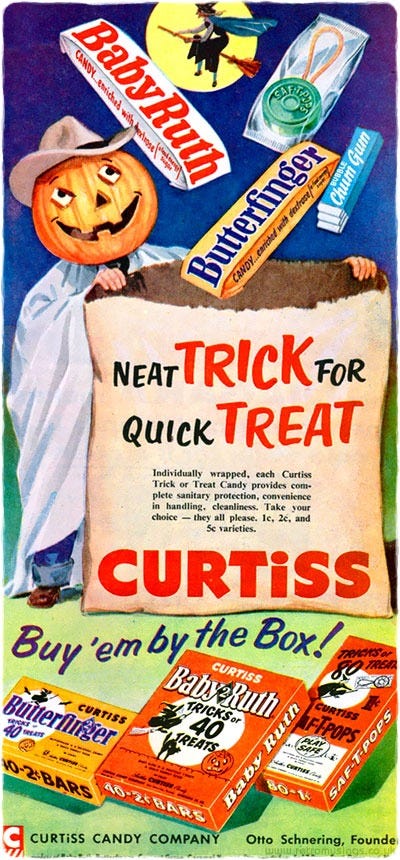
One of the major engines of growth in the mainstreaming of Halloween occurred in America’s candy industry. By the late 1940s, candy sales skyrocketed in the United States in the weeks leading up to October 31. Many confectionary innovations predated the Postwar Era. The concept of a miniature candy bar was first introduced in the 1930s. Companies like Curtiss Candy Company (Baby Ruth and Butterfinger) were selling “bite-size miniatures” as far back as the early 1930s as an inexpensive lunchbox or small treat item. Hershey’s Kisses, tiny pop-in-your-mouth chocolate treats wrapped in foil, came out in 1907, and the company released its Hershey’s Miniatures — small, individually wrapped candy bars — in 1939, both of which became Halloween candy staples by the Postwar Era.
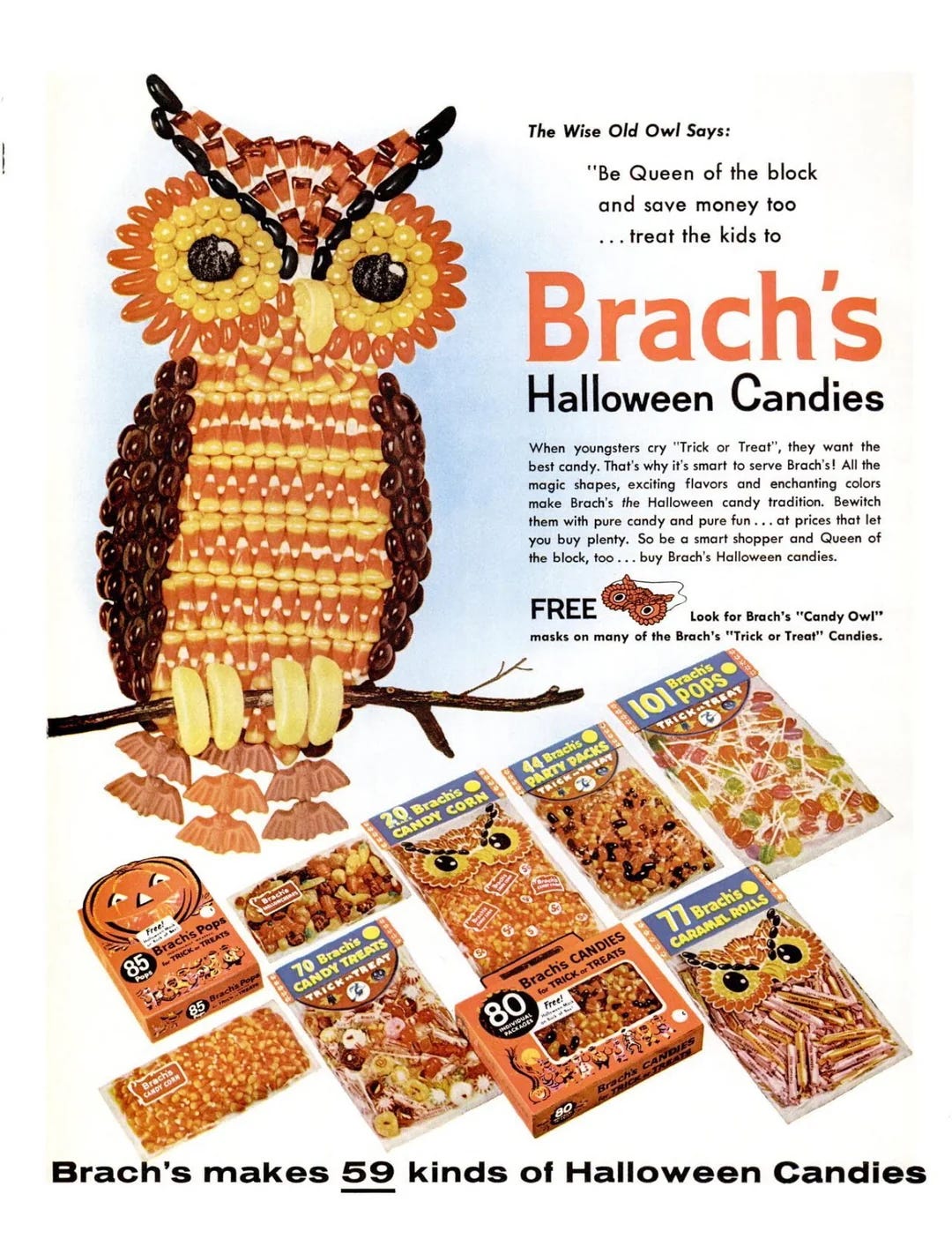
Candy corn, created in the 1880s by George Renninger, a candymaker at the Wunderle Candy Company in Philadelphia, turned into a dark horse runaway Halloween favourite in the Postwar Era. Brach’s, a Chicago-based candy company that opened in 1904, leapt into the Halloween candy craze in a big way with its king-size plastic bags full of mixed candies that hit store shelves right after Labor Day, offering a mix of suckers, hard and chewy candies, candy corn, and its famous “Mellowcreme” candy pumpkins.
All of these types of beloved sweets became closely associated with Halloween, nudging the holiday deeper into the middle of American life.
Halloween Peanuts
By the 1960s, Halloween was fast emerging as one of the big holiday leviathans in the United States, rocketing to a stratosphere previously occupied only by the likes of Christmas and Thanksgiving. It proved an especially significant cultural event among children who loved dressing up and trick-or-treating.
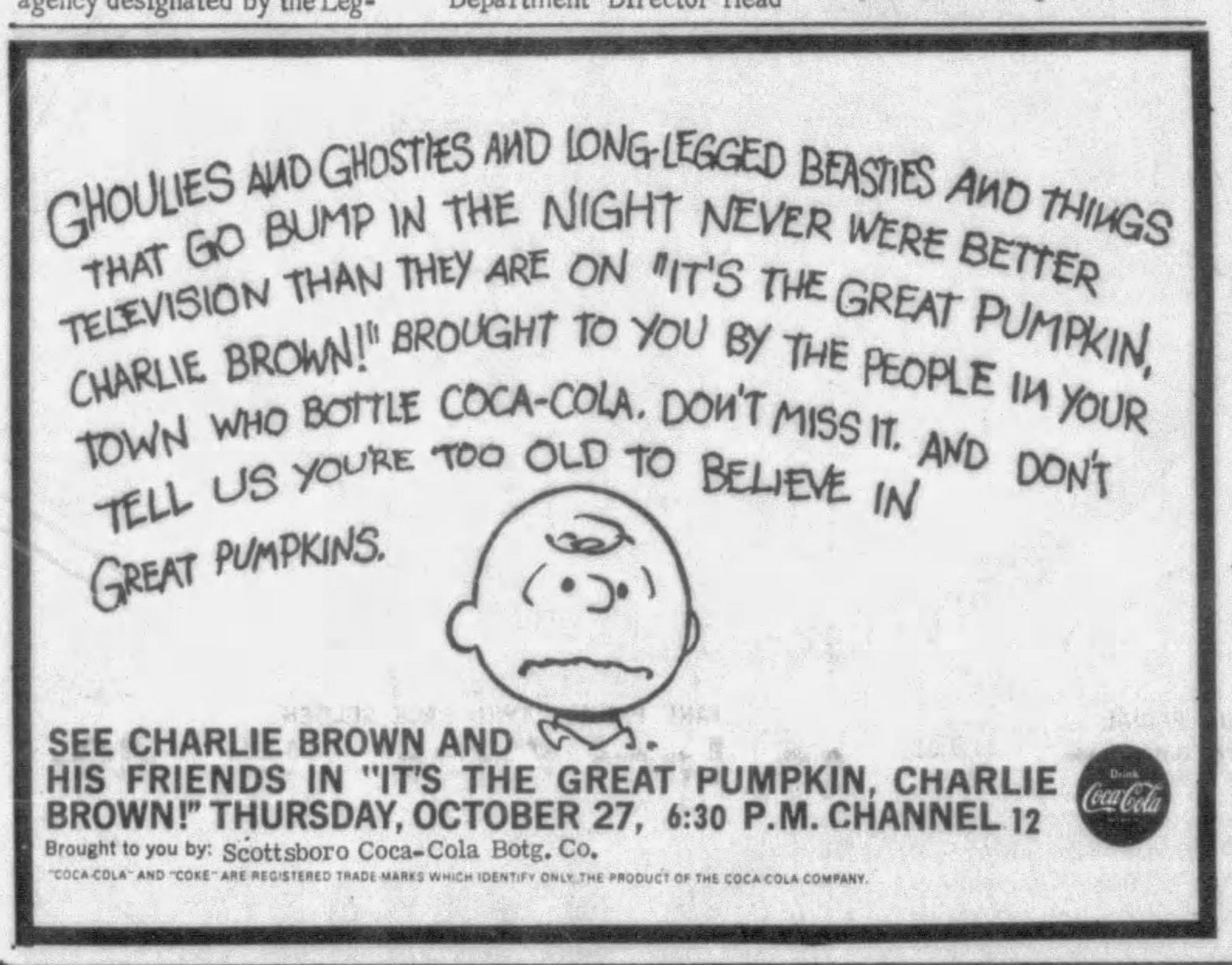
A sign of Halloween’s growing gravitas came when It’s the Great Pumpkin, Charlie Brown premiered on Thursday, October 27, 1966. Following up on the success of the previous year’s A Charlie Brown Christmas, the story revolves around the Peanuts gang as they prepare for Halloween. “It all came about when I was trying to write a sequence for the strip involving Linus’ confusion between Halloween and Christmas,” explained Peanuts creator Charles Schulz. “The holidays run together so quickly at the end of the year – Labor Day, Columbus Day, Halloween, Thanksgiving, New Year’s – that it becomes kind of a jumble to little children.”[8]
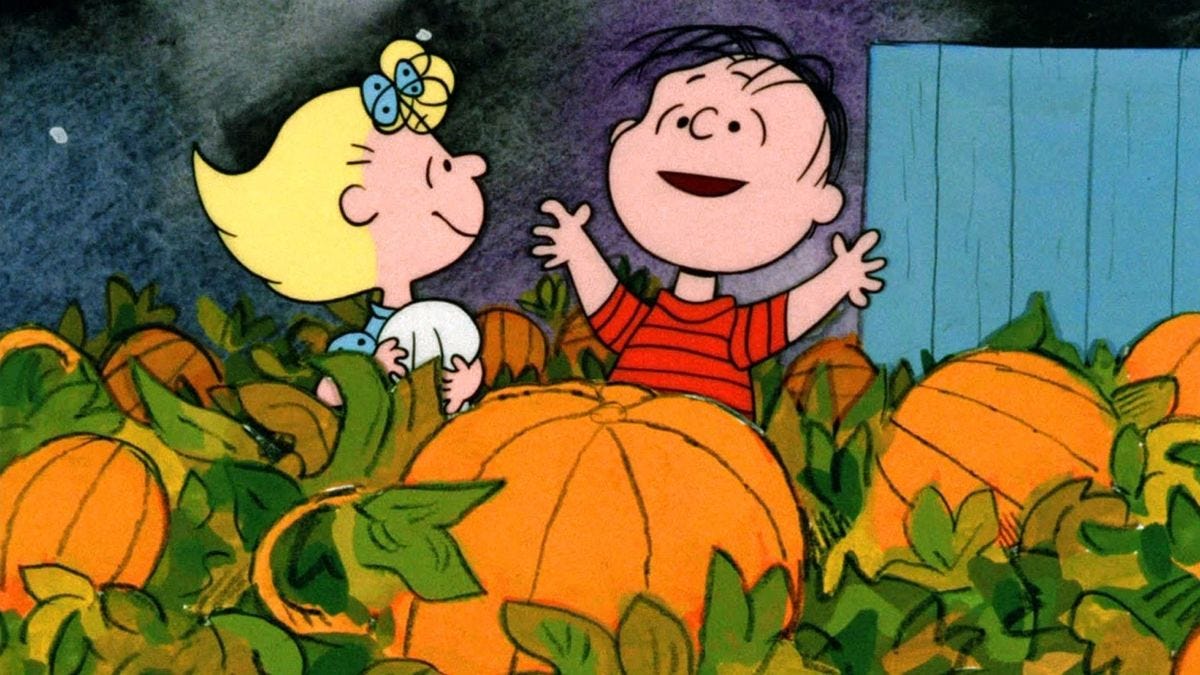
A brief recap: Kind-hearted, innocent Linus, convinced of the existence of the Great Pumpkin (a mythical Halloween figure who delivers gifts to boys and girls), decides to spend Halloween night in a pumpkin patch. He believes the Great Pumpkin will rise from the patch for his gift-giving rounds. Despite everyone’s skepticism, Sally chooses to stay with Linus, missing out on trick-or-treating in an act of devotion. Meantime, the others in the Peanuts gang go door-to-door in their costumes, and Snoopy imagines he’s a World War I flying ace battling the Red Baron.
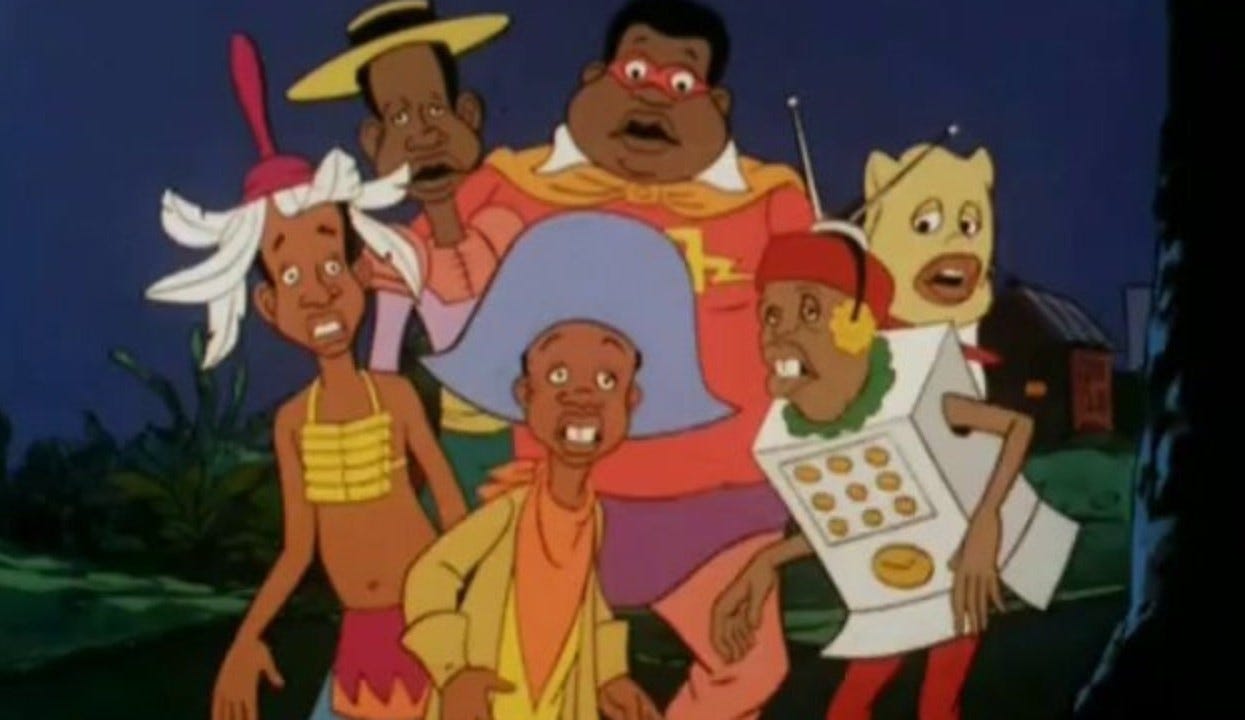
Upon its debut broadcast, It’s the Great Pumpkin, Charlie Brown became an instant tradition, repeated by CBS each October for every year thereafter. And it became the template for future Halloween specials, including The Muppet Show episode with Vincent Price (1976), the Fat Albert and the Cosby Kids Halloween special (1977), Bugs Bunny’s Halloween Special (1977), the Grinch (1977 . . . yes, he had a Halloween special, too!), The Flintstones Meet Rockula and Frankenstone (1979), A Disney Halloween (1983), Garfield’s Halloween Adventure (1985), a Power Rangers Halloween episode (“Trick or Treat,” 1994), Freaks and Geeks (1999), The Berenstain Bears (2003), and the numerous “Treehouse of Horror” episodes of The Simpsons, to name but a few.
Parting thoughts…
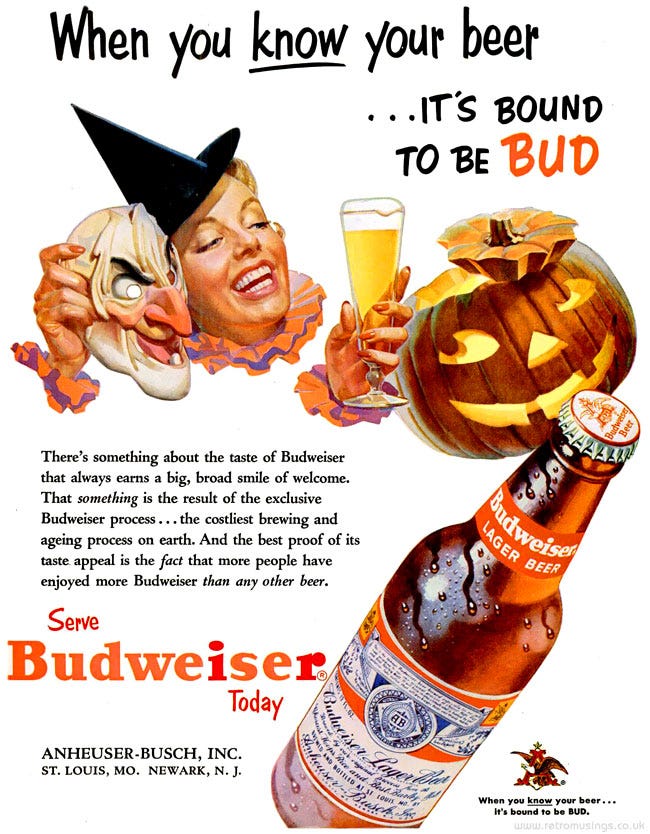
The Postwar Era marked the final, decisive step in Halloween’s long journey from ancient pagan ritual to modern commercial holiday. Driven by the standardization of tastes, the Baby Boom, the rise of television, and a shared nationwide popular culture, the holiday completed its shift from anonymous, homemade terror to predictable, branded fun. The introduction of mass-produced novelties — from the bite-sized candy bar to the iconic full-head latex monster mask, and most famously, the disposable vinyl-smock-and-plastic-mask costume — transformed Halloween night into a safe, supervised, and instantly recognizable showcase of American pop culture and consumer power. Entire communities joined in on the fun with decorated homes, “spook house” fundraisers, and school parties.
And while times have certainly changed, we are still living in the shadow of these remarkable Postwar developments.
NOTES
[1] “Halloween Vandalism,” Lincoln Journal Star, November 13, 1910, 21.
[2] “Halloween Vandalism,” Indianapolis News, October 26, 1923, 6.
[3] “Halloween’s Safety Tips Again Issued,” Van Nuys Valley News, October 25, 1955, 7.
[4] “Halloween Safety Tips Told,” Albuquerque Tribune, October 16, 1959, 20.
[5] “City Makes Available Halloween Party Tips,” Connecticut Post, October 6, 1955, 28.
[6] Jack Santino, “Halloween in America: Contemporary Customs and Performances,” Western Folklore, January 1983, Vol. 42, No. 1, 2.
[7] Terence Towles Canote, “Ben Cooper Inc. & Its Competitors: The Folks Who Sold Halloween,” A Shroud of Thoughts Pop Culture Blog, October 24, 2012. URL: https://mercurie.blogspot.com/2012/10/ben-cooper-inc-its-competitors-folks.html
[8] “‘Great Pumpkin’ is a Living Legend Due to Faith, Loyalty of Cartoonist,” Marion Chronicle Tribune, Friday, October 21, 1966, 30.

Great article. Good to remember how much the holiday has transformed and evolved. I am lamenting the death of the version I knew from the 1980s, 90s, and early 2000s, which were likely distinct from what’s happening today. I discussed the current social media fueled iteration in my own piece today https://open.substack.com/pub/collegetowns/p/where-have-all-the-trick-or-treaters?r=7f4tk&utm_medium=ios
Interesting! Though I must say I love the earlier macabre looks.